Systems thinkingJourney auditDesign systemsCross-functional delivery
S / SITUATION
The cost of three different answers.
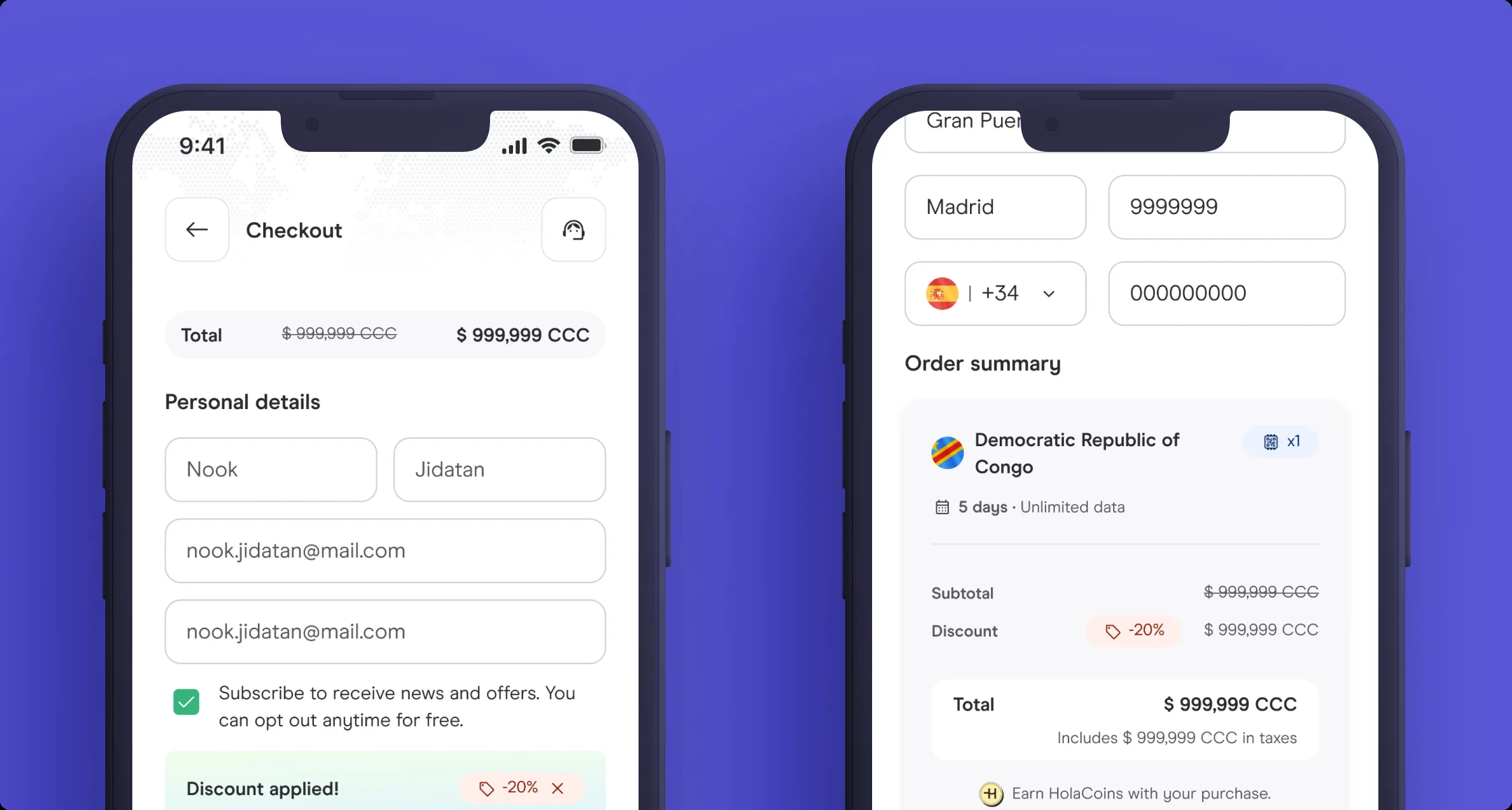
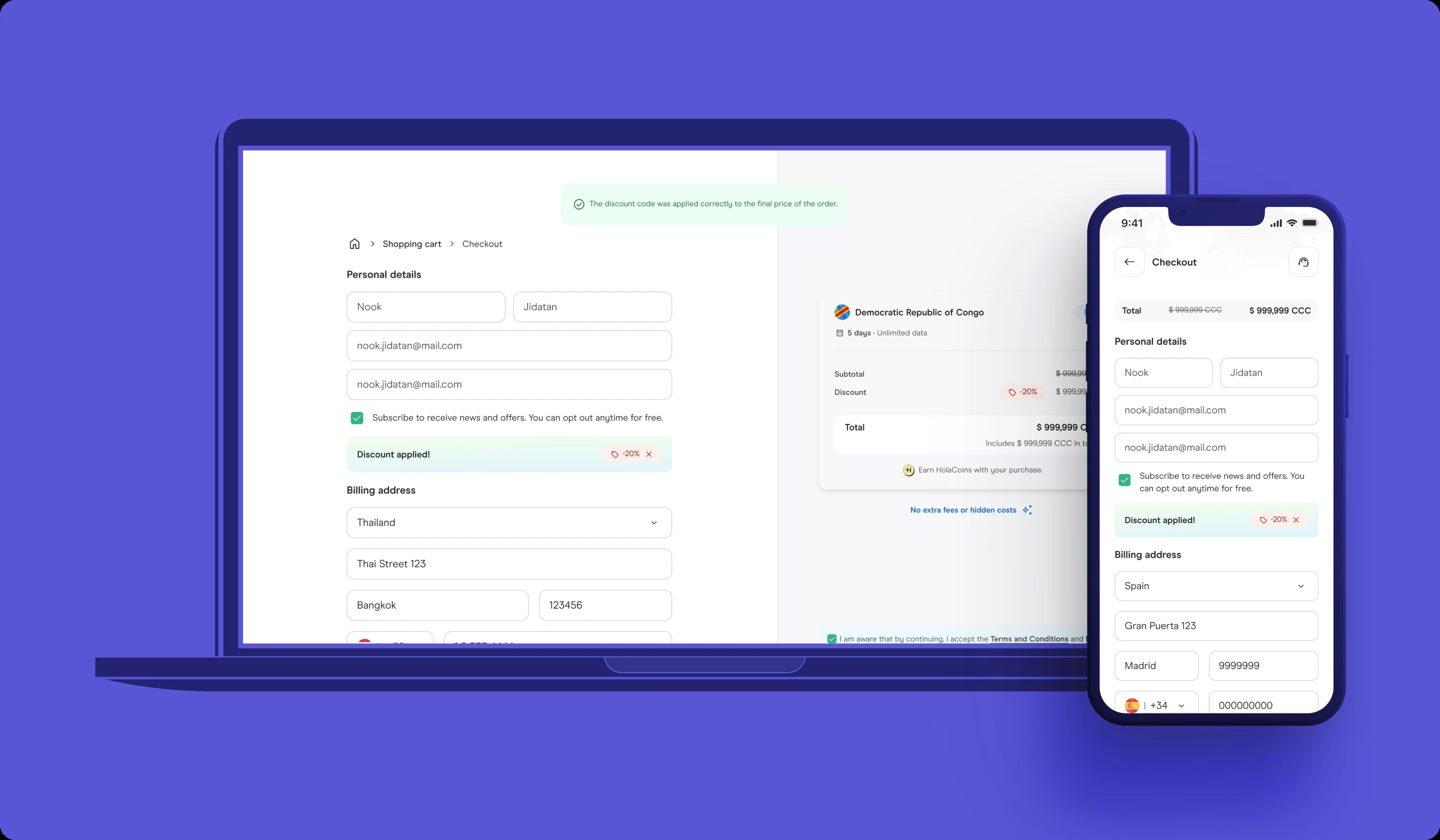
One customer could encounter different fields, validation rules and error messages depending on the platform. Separate squads had built each checkout, so each new requirement multiplied decisions, implementation and QA.
An anti-fraud requirement made that fragmentation a business constraint. Billing address was required on desktop, optional on responsive web and absent in the app. Patching each flow would preserve the same maintenance problem.
T / TASK & OWNERSHIP
Make one system work across three contexts.
My responsibility was to make the divergence visible, agree on what should be shared with Product and Engineering, and translate that agreement into an implementable field architecture. The goal was a predictable purchase experience that could absorb new requirements without three separate redesigns.
A / ACTIONS & DESIGN DECISIONS
Standardize the behavior. Keep the necessary differences.
The key scope decision
17
Shared behaviors
Fields, states and reusable validation patterns.
6
Intentional differences
Local payment, market and legal requirements.
01
Problem framing
Audit before redesign.
I compared every step across the three surfaces and documented 23 divergence points. That changed the discussion from a visual preference to a concrete prioritization problem: which differences created friction, compliance risk or repeated work?
02
Systems thinking
One foundation, intentional exceptions.
I resolved 17 points into shared behavior and kept six differences explicit for market, payment or legal needs. A component library covered field states and edge cases, including keeping the order summary usable when the iOS keyboard appeared. Consistency meant predictable rules, with room for context.
03
Scope & delivery
Migrate with the teams.
I scoped the work around the checkout foundation and documented the behaviors engineering needed to implement. Desktop, responsive web and native app moved in phases. Payment integration remained a separate system; the app team had a migration path rather than an immediate replacement.
Shared field and validation architecture across desktop and mobile checkout.
R / RESULTS & BUSINESS IMPACT
Better conversion. A clearer foundation for change.
+17%
e-commerce conversion · following 30 days
17 / 23
divergences resolved into shared behavior
3 → 1
surfaces connected by one foundation
E-commerce conversion increased 17% in the 30 days following consolidation. The shared architecture also gave Product and Engineering one reference for future requirements. My contribution connected the audit, design decisions and delivery; the commercial result belongs to the cross-functional team.
Post-launch observation on e-commerce; not an isolated attribution to a single design change.
What I learned
Naming the exact differences made alignment possible. A design system creates business value when it reduces repeated decisions and makes exceptions understandable.
What I would explore next
I would extend the audit to adjacent purchase moments and combine funnel data with qualitative research to understand why behavior differs across surfaces.