Enterprise demand had outgrown a consumer journey.
Companies were buying connectivity through a consumer checkout, then handling employees and invoices in spreadsheets. Finance needed reconciliation, team managers needed assignment controls, and procurement needed permissions and billing terms. The gap affected both daily operations and the ability to serve enterprise accounts.
The first clients had different procurement models: centralized billing, regional assignment and cost-center approvals. Designing a custom admin for each would turn every new sale into another product to maintain.
T / TASK & OWNERSHIP
Connect the service before designing the screens.
As the sole designer, I owned the product model, information architecture and core workflows. I worked with the PM, engineering, Sales, Finance and Legal to find what could remain stable across clients, while making procurement differences configurable.
A / ACTIONS & DESIGN DECISIONS
Make complexity configurable, instead of multiplying products.
The reusable product model
01
Plan
What connectivity is available.
02
Assignment
Who receives it, under which permissions.
03
Billing
How usage maps to accounts and cost centers.
01
Discovery & alignment
Build a shared vocabulary first.
I mapped stakeholders and worked through the meanings of plan, assignment and billing with the business and backend teams. Separating those concerns revealed the invariant: a change in billing logic should not require a new assignment flow. That model became the foundation for the information architecture.
02
Service & workflow design
Fit the product into the customer’s operation.
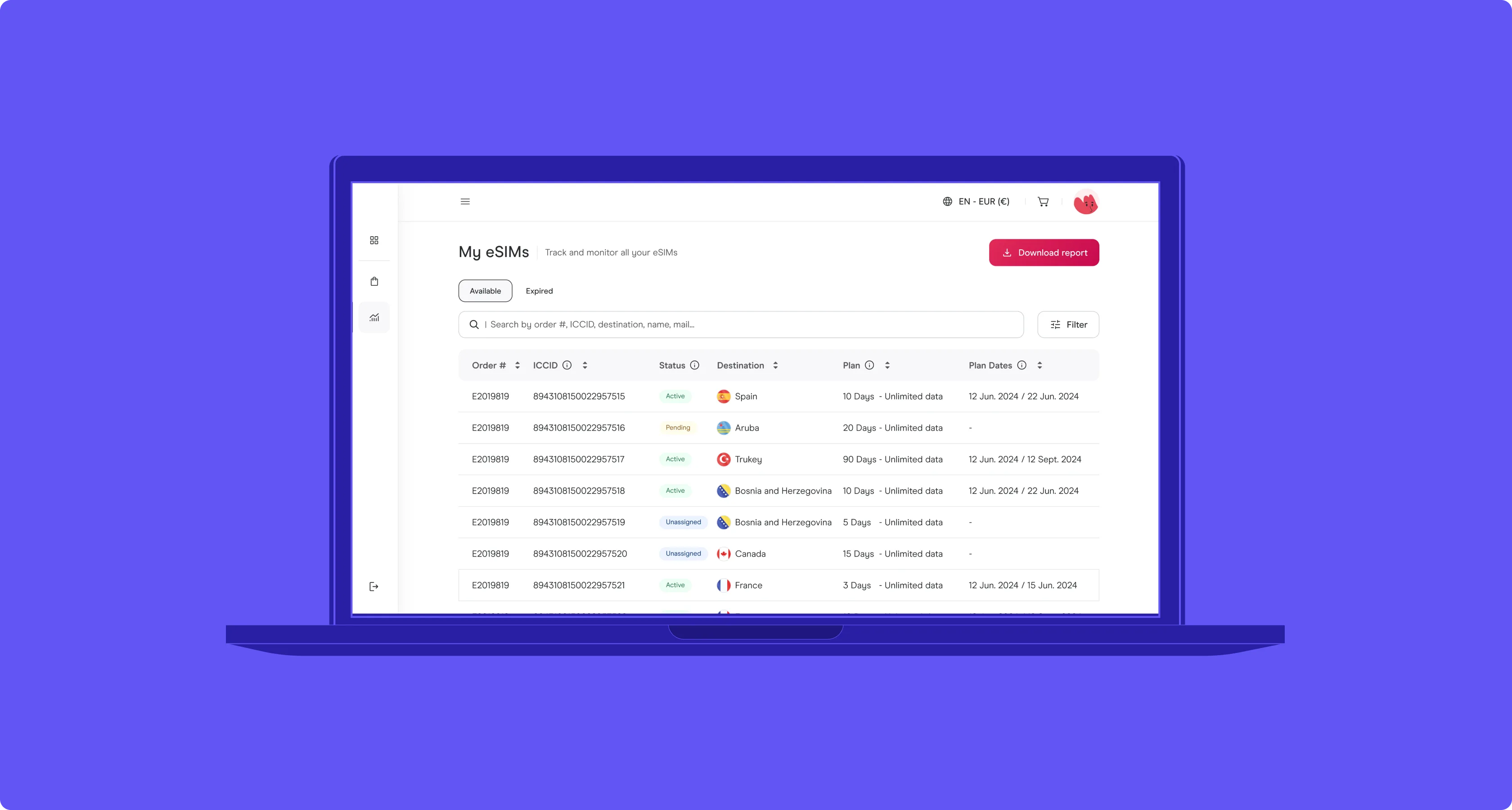
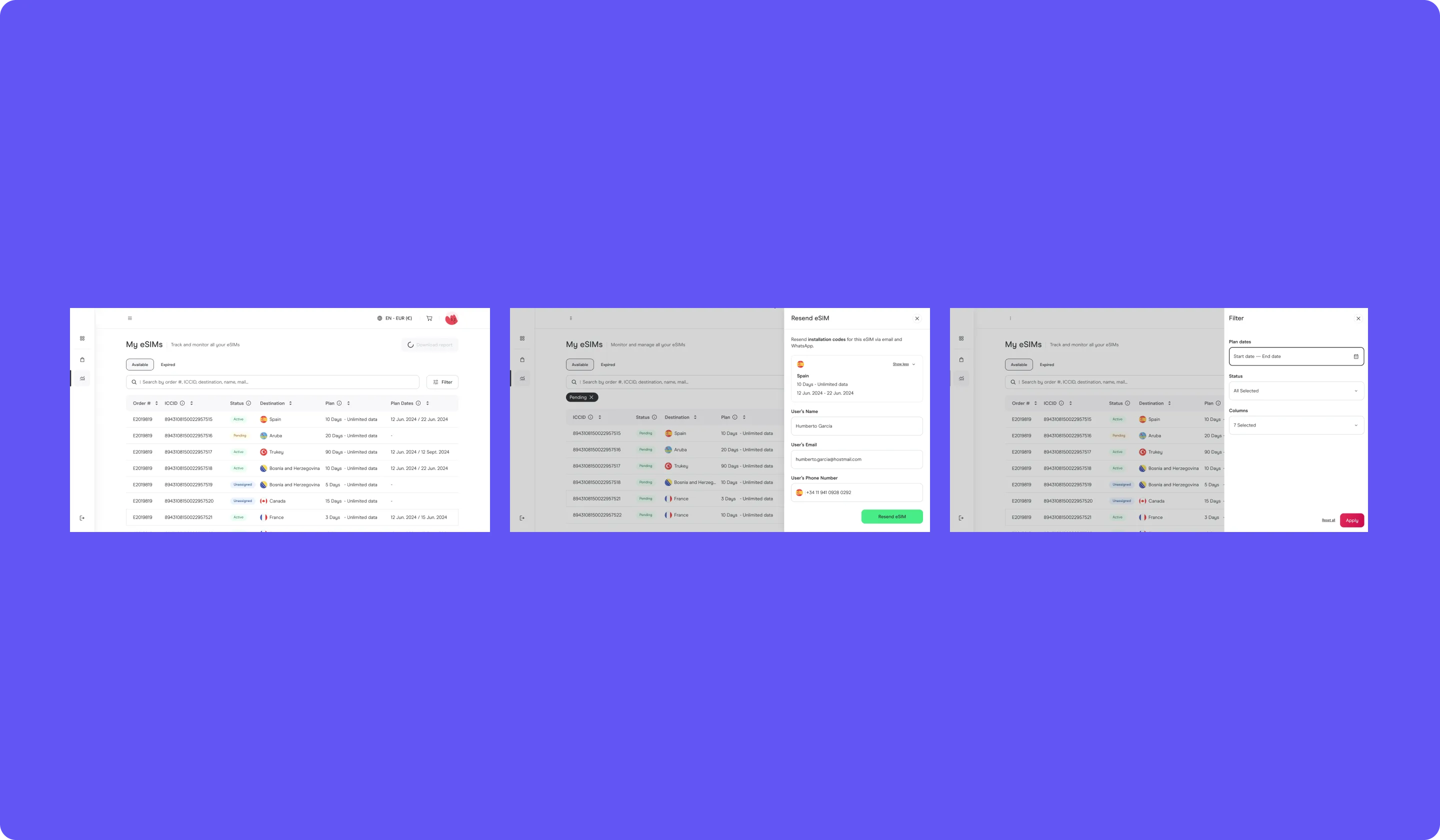
I designed bulk CSV assignment around the spreadsheets IT teams already used, role-based access around administrative responsibilities, and billing views around reconciliation. The design connected the customer-facing interface to the operational work behind it, reducing the need to learn a new process for each task.
03
Product judgment
Choose the constraints that protect scale.
I favored configuration over client-specific builds. I also kept onboarding sales-assisted because enterprise accounts needed contracts and pricing decisions, and deferred real-time reporting where daily updates covered the primary need. Those scope choices balanced customer value, technical feasibility and maintenance cost.
Team management, bulk assignment and billing views within one enterprise product.
R / RESULTS & BUSINESS IMPACT
One architecture. Thousands of companies.
3,000+
companies using the platform
9
billing configurations on one product model
160+
destinations supported
The platform grew to serve more than 3,000 companies across 160+ destinations. Its shared model supported nine billing configurations without creating a separate product for every client. The value of the architecture was operational: a new procurement model could become configuration, rather than another redesign.
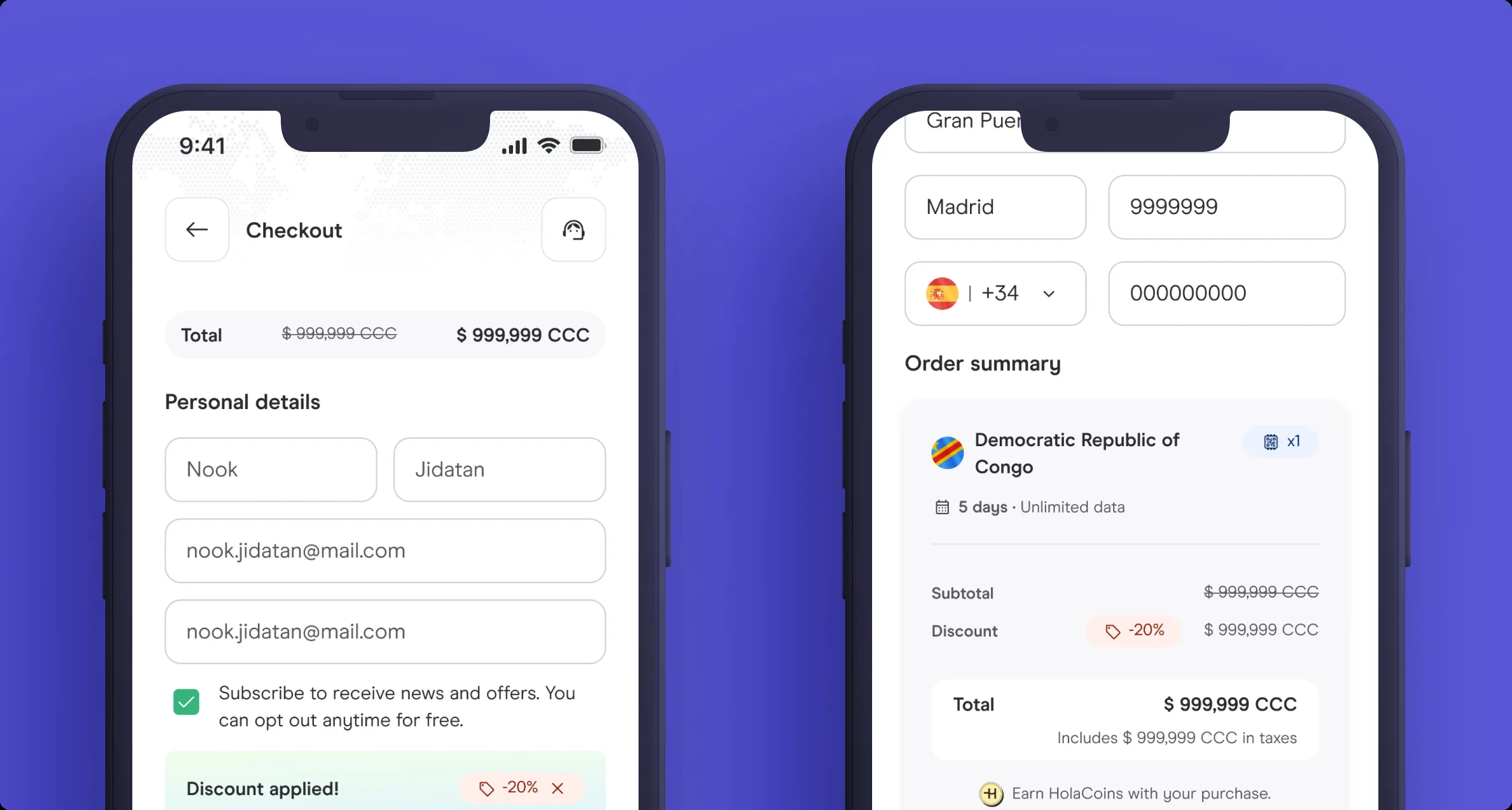
Platform scale and configuration outcomes. Checkout conversion is reported in its own case.
What I learned
The most important design work happened in the mental model. Clear objects and responsibilities made the interface simpler and gave engineering a foundation that survived new business requirements.
What I would explore next
I would investigate where smaller teams need lighter administration and define the evidence that would justify self-service onboarding or more frequent usage reporting.